
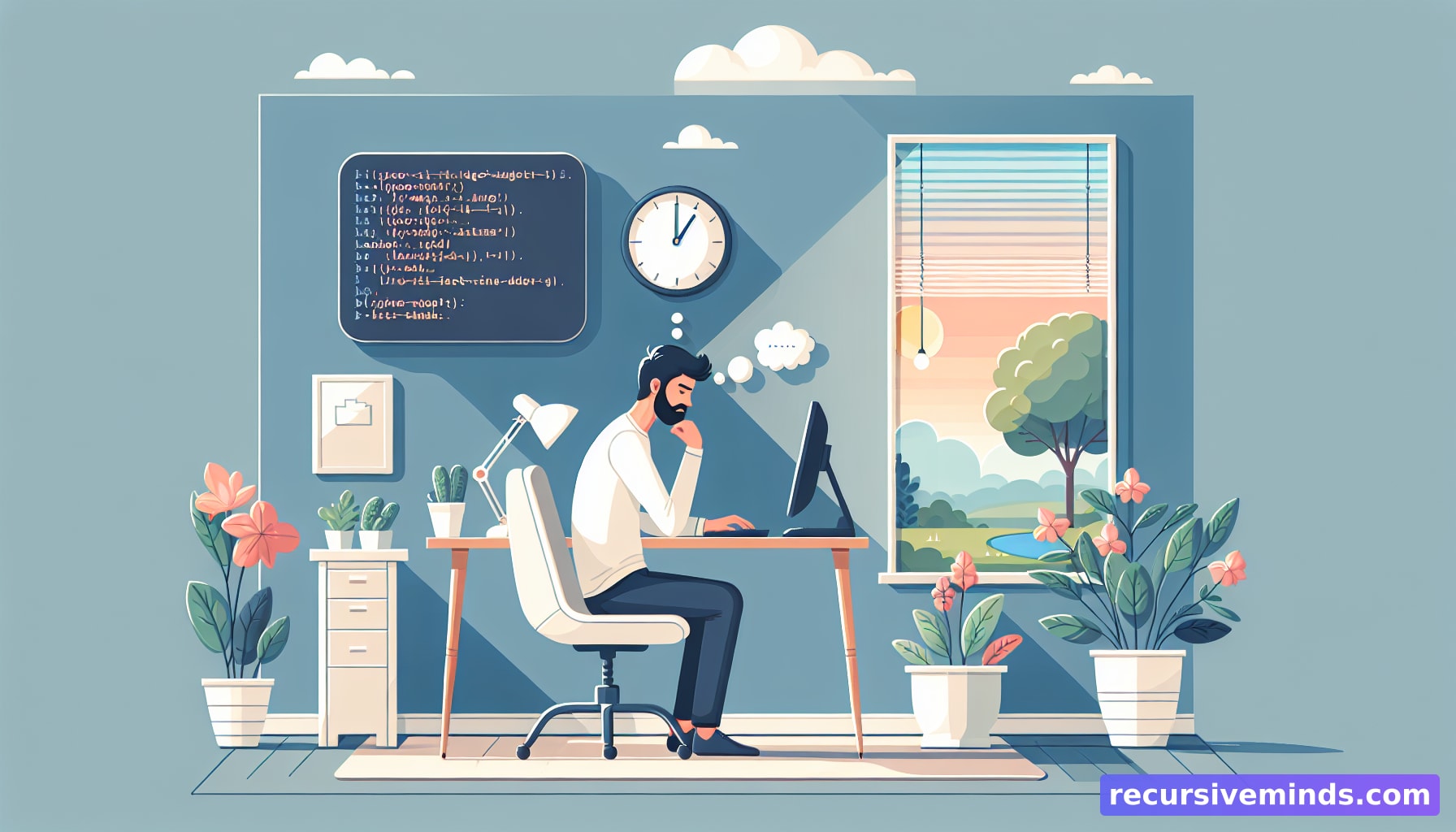
Why Slowing Down Enhances Learning
In today's fast-paced world, learning to code can feel overwhelming. However, slowing down can actually accelerate your progress. But why is this the case? For one, it allows your brain to process information more deeply. When you take your time, you understand concepts better. As a result, you retain the information longer.
Moreover, slower learning reduces stress. This makes coding more enjoyable. Coding should be fun, not a race. Therefore, taking it slow can boost your motivation to learn more.
The Science Behind Slower Learning
Research supports the benefits of learning at a slower pace. For example, a study from Stanford University ↗ found that students who took breaks during study sessions retained more information. Additionally, slower learning helps in building a stronger foundation in programming skills.
When you rush, you might miss crucial details. These details can be important for understanding complex programming concepts. In contrast, a slower pace allows you to absorb and reflect on these details. Hence, you become a more competent coder over time.
Techniques for Slowing Down
1. Focus on One Concept at a Time
First, concentrate on one programming concept. For instance, if you're learning loops, stick to that topic. Do not switch to arrays before fully understanding loops. This focus prevents overload and confusion.
2. Practice Mindful Coding
Mindful coding involves being present while you code. Avoid distractions like social media. Furthermore, give yourself time to think about each line of code. Ask questions, such as "Why am I using this function?" This practice deepens your understanding.
3. Take Regular Breaks
Taking breaks is crucial. For example, use the Pomodoro Technique, which involves 25 minutes of focused work followed by a 5-minute break. This method keeps your mind fresh and increases productivity.
Real-Life Applications of Slower Learning
Case Study: The Power of Deliberate Practice
Angela Duckworth ↗, a researcher known for her work on grit, emphasizes deliberate practice. This method involves working on skills that challenge you just beyond your current abilities. In coding, this might mean tackling a slightly harder problem than usual.
Deliberate practice requires time and patience. However, it leads to significant improvements. You build skills that are deeply ingrained and easily recalled.
Code Example: Understanding Loop Structures
Consider this simple loop in Python:
Take your time to understand how the loop works. What happens at each iteration? How does the range() function operate? By slowing down, you can grasp these details more effectively.
Embracing a Slow Learning Culture
Creating a Supportive Learning Environment
Surround yourself with people who value slow learning. Join forums or communities that emphasize understanding over speed. For example, the Stack Overflow ↗ community can be a great resource.
Additionally, Recursive Minds offers articles and resources that support thoughtful learning approaches. Engaging with these resources can further reinforce your slow learning journey.
Tools and Resources
There are many tools available to aid slow learning. Websites like Khan Academy ↗ offer interactive exercises at a comfortable pace. Moreover, using platforms like Codecademy ↗ can provide structured, bite-sized learning modules.
Conclusion
In conclusion, slow learning is not about laziness. It's about strategic, deep learning. By reducing pressure, you not only enjoy coding more but also become more proficient. So, take a step back, breathe, and embrace the slow path to coding mastery.
FAQs
What are the benefits of learning to code slowly?
Learning slowly helps you understand concepts deeply and retain information longer. It also reduces stress.
How can I practice mindful coding?
Stay present and avoid distractions while coding. Take breaks often and think about the purpose of each line of code.
What resources support slow learning in coding?
Platforms like Khan Academy ↗ and Codecademy ↗ offer resources that allow you to learn at your own pace.
Why is taking breaks important in coding?
Breaks refresh your mind and prevent burnout. They also help consolidate new information, making learning more effective.
Call to Action
Ready to master coding without pressure? Start your journey today with resources from Recursive Minds! Discover easy, stress-free learning methods now.